
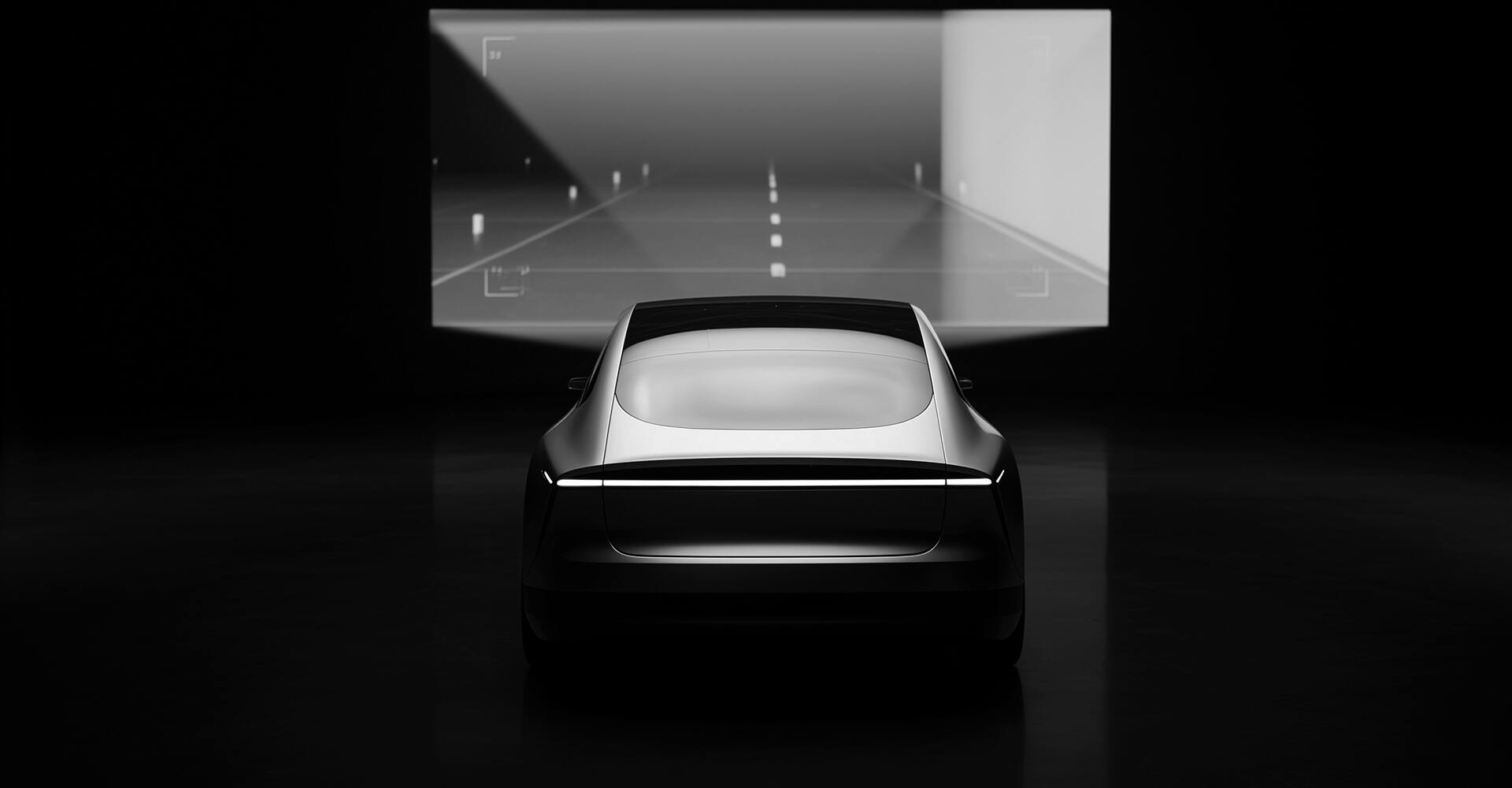
Driver assistance systems
Connected, energy-efficient, and autonomous driving are shaping the future of mobility. Modern driver assistance systems (ADAS) and automated driving functions (AD) have long since become key differentiators. However, traditional road tests are increasingly reaching their limits – they are too expensive, too risky, and not reproducible enough. Virtualized X-in-the-Loop (XiL) approaches enable faster development cycles, valid decisions, and cost-optimized validation of complex functions. To meet these requirements, AIP has developed the Torque Wheel Dynamo Meter (TWDM) – a new generation of test benches that combine real driving conditions with the control of a laboratory.
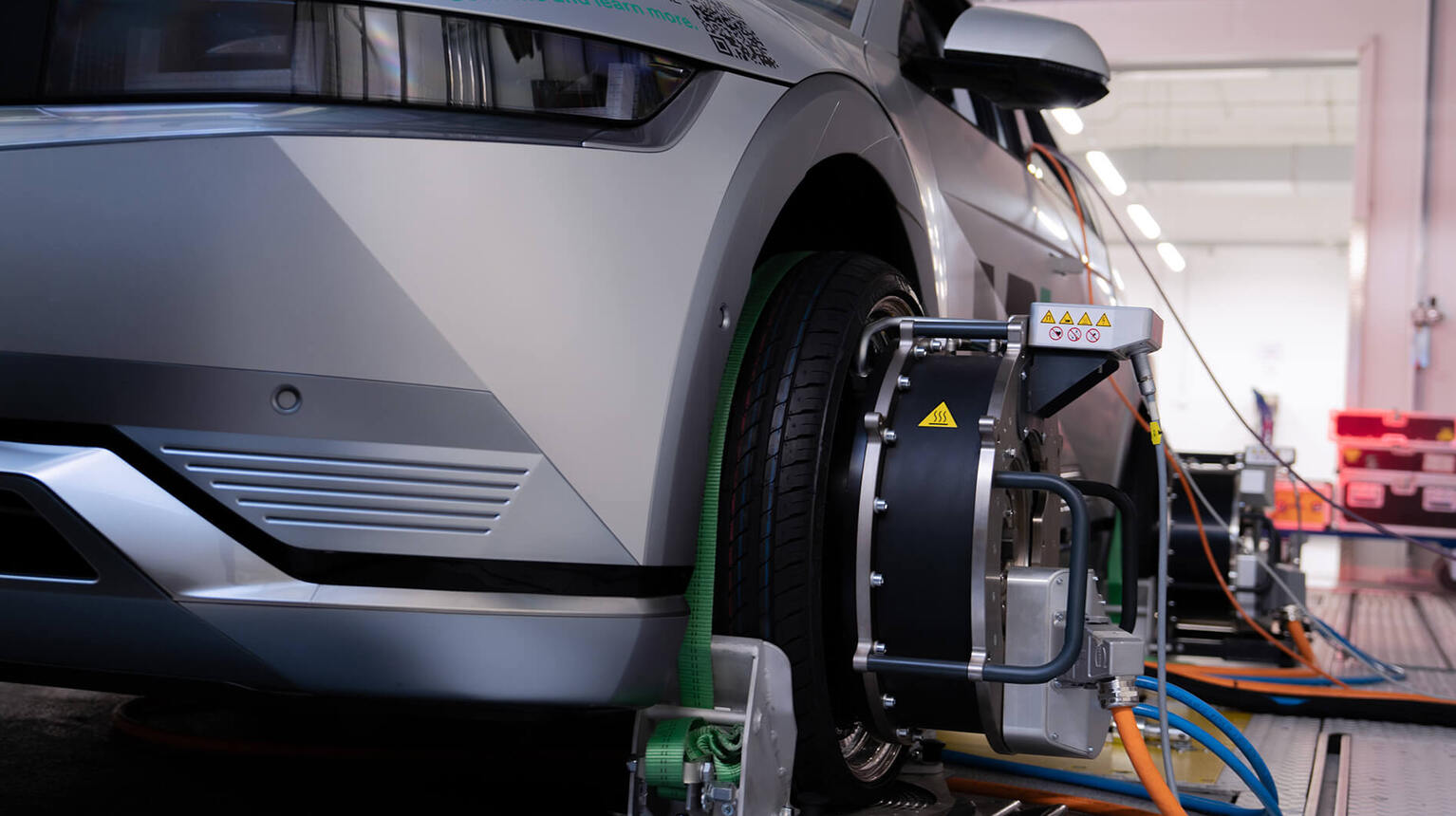
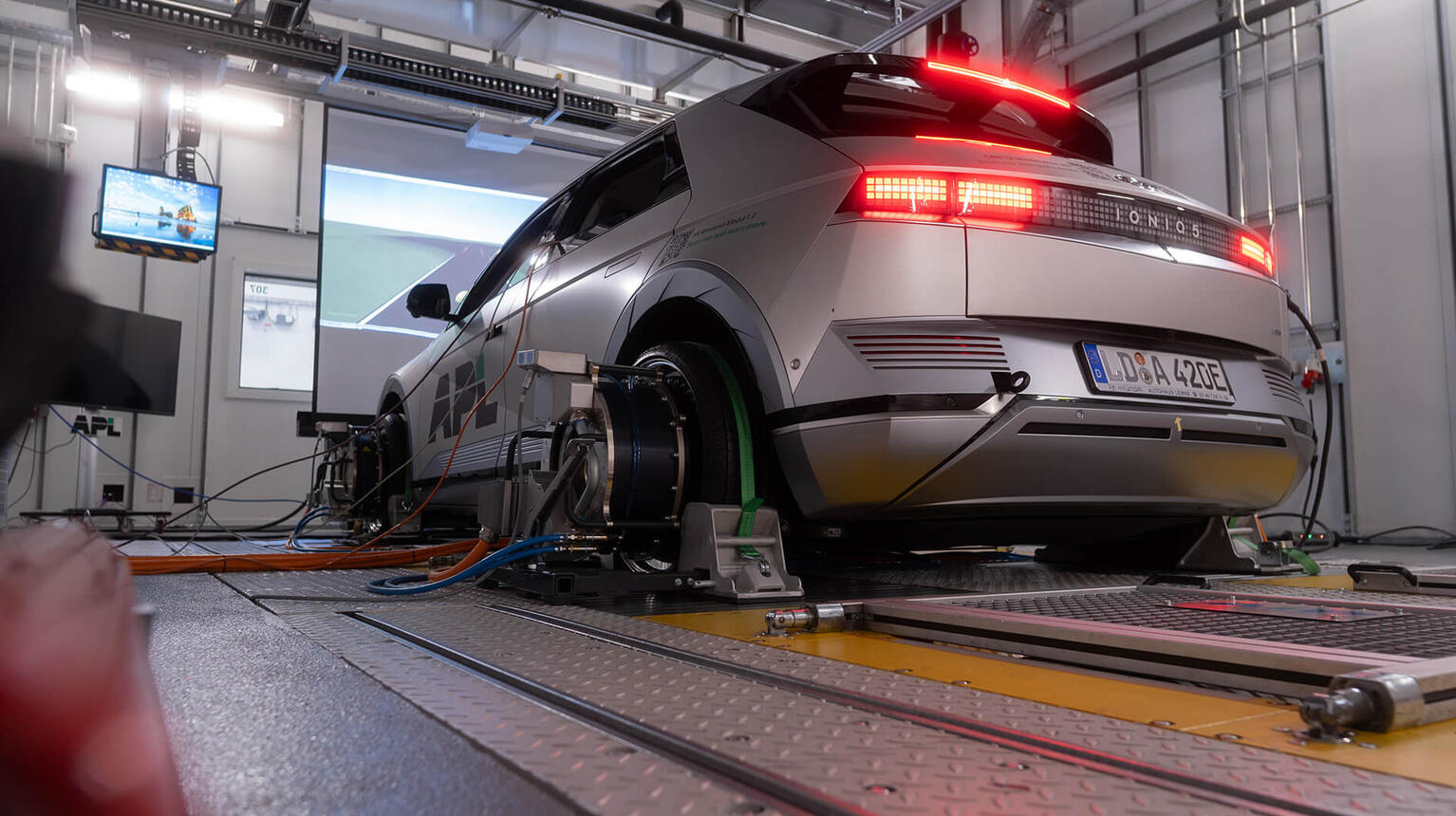
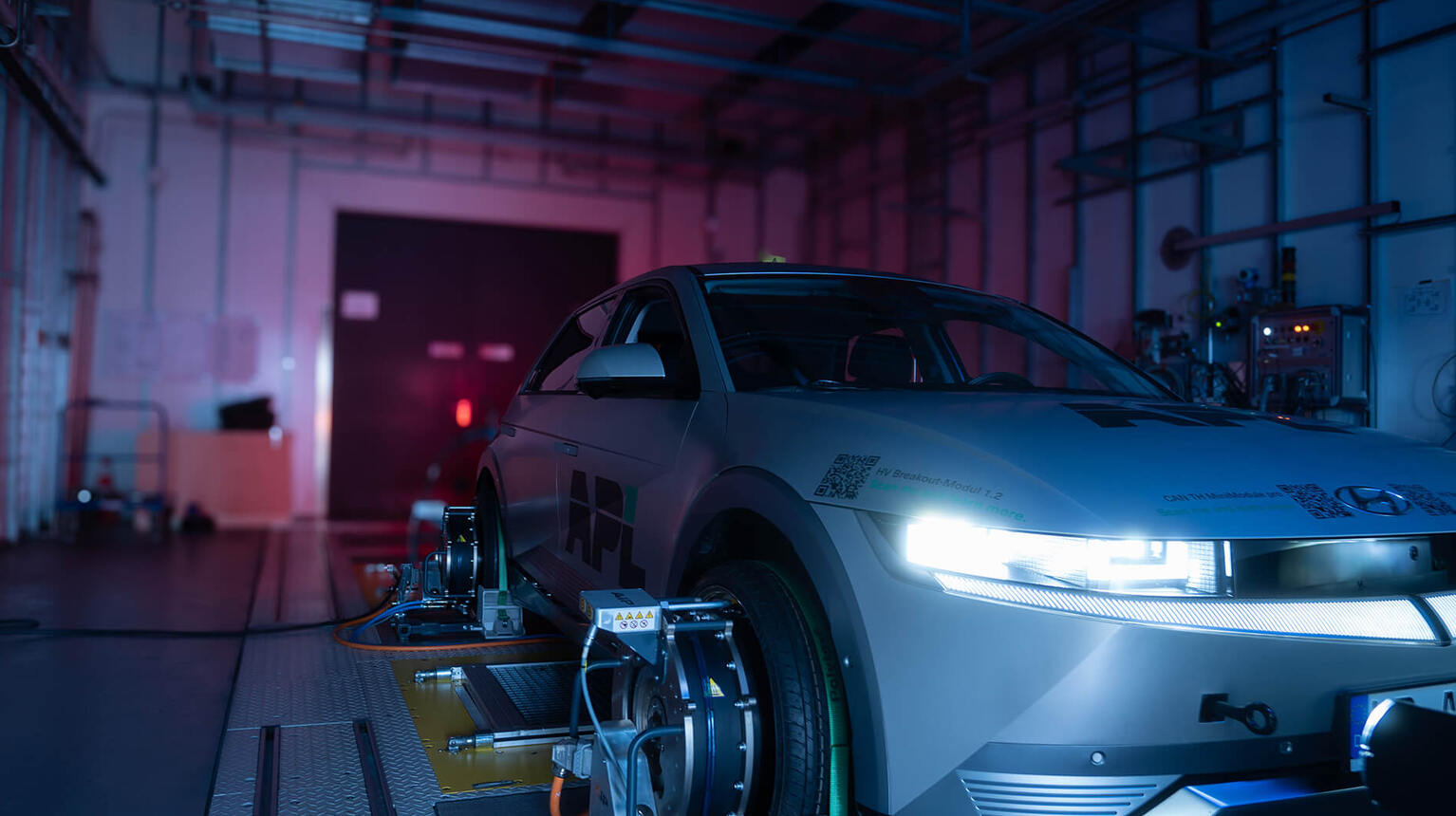
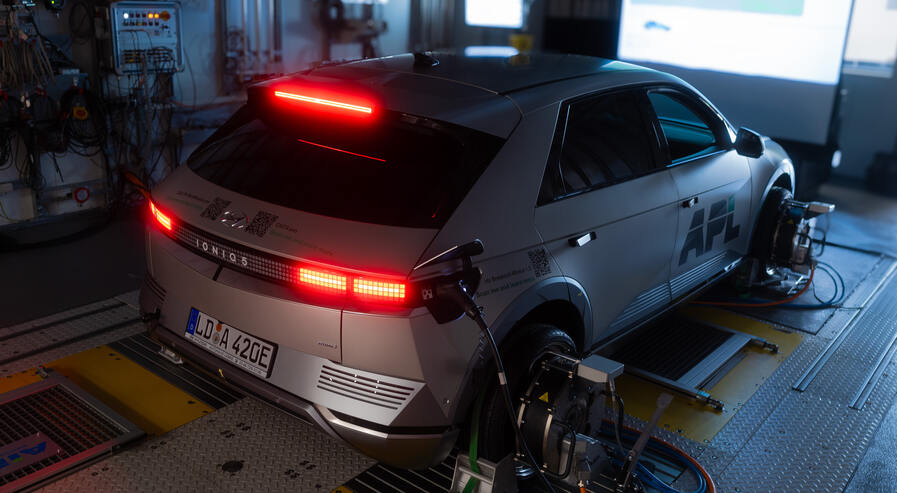
Driving dynamics. From a standing start.
With TWDM, AIP presents a new vehicle-in-the-loop test bench that sets a milestone in the validation of modern vehicle functions. The system offers more degrees of freedom than conventional test benches and enables realistic, yet fully reproducible driving maneuvers.
At its core is a patented 4-motor concept in which each wheel rim is controlled separately:
- four independent wheel motors for maximum freedom of movement,
- realistic driving profiles thanks to precise individual wheel control,
- complete reproducibility of all maneuvers,
- optional electromechanical turntable for authentic steering movements.
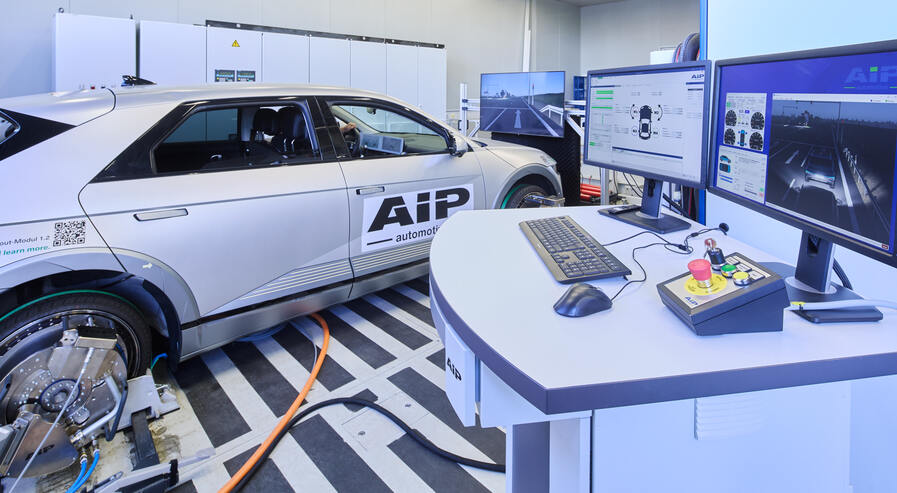
Real scenarios. Controlled conditions.
The TWDM transfers real driving scenarios into a fully controllable laboratory environment, creating test conditions that can be reliably repeated at any time, regardless of weather, traffic, or road conditions. It can be seamlessly integrated into climate and EMC chambers and fits easily into existing test environments. At the same time, the connection to modern 3D simulation environments offers the possibility of linking virtual driving worlds directly to the real vehicle.
The use of state-of-the-art technologies creates a highly flexible platform that can easily map even complex ADAS and AD scenarios:
- GNSS spoofing for realistic manipulation of global position data
- Radar target simulation for authentic object detection and distance measurement
- V2X communication for validating connected driving functions
- Camera I/O integration for direct stimulation of camera-based sensors
The TWDM thus enables a test environment that is realistic, quickly scalable, and repeatable at will – ideal for validating modern driver assistance and automation functions.
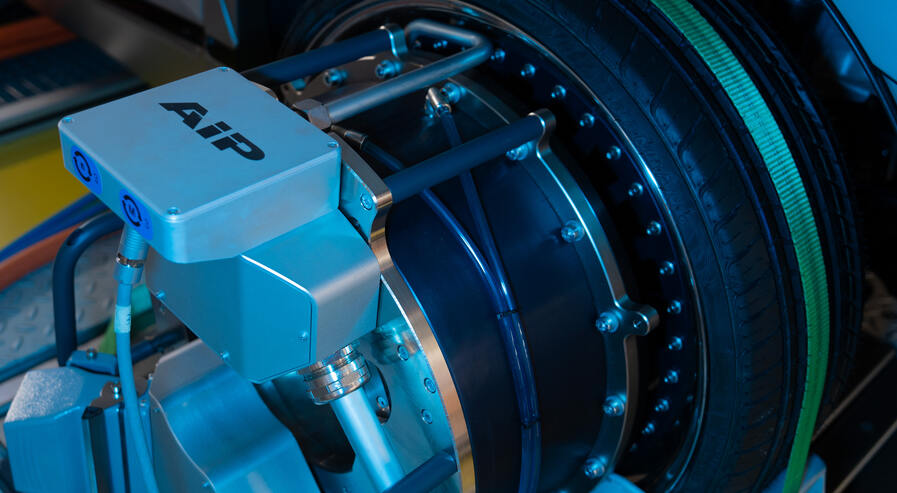
Added value for every test strategy
The TWDM was developed to be easily integrated into a wide variety of test environments – without costly conversions, vehicle modifications, or lengthy preparation times. Its sophisticated design allows for quick setup and equally quick switching between test vehicles or test bench locations.
Thanks to its mobile concept, the TWDM can be used flexibly wherever it is needed – whether in the laboratory, in the climate chamber, or in the EMC environment. At the same time, its clever mechanical setup allows combined steering and driving tests without the need for any intervention on the vehicle itself. The excellent accessibility to all vehicle-side sensors also makes the TWDM ideal for ADAS stimulation methods, while its EMC capability qualifies it for the most demanding test conditions.
Advantages at a glance:
- Quick installation without structural modifications
- No attachment to the vehicle chassis necessary
- Mobile system for flexible locations
- Steering and driving tests possible simultaneously
- No modifications to the vehicle steering required
- Excellent accessibility to sensors – ideal for ADAS stimulation methods
- EMC-capable and designed for demanding test environments
With these features, the TWDM offers a compact, versatile platform that shortens test times, accelerates development processes, and creates new degrees of freedom for modern ADAS and AD test strategies.
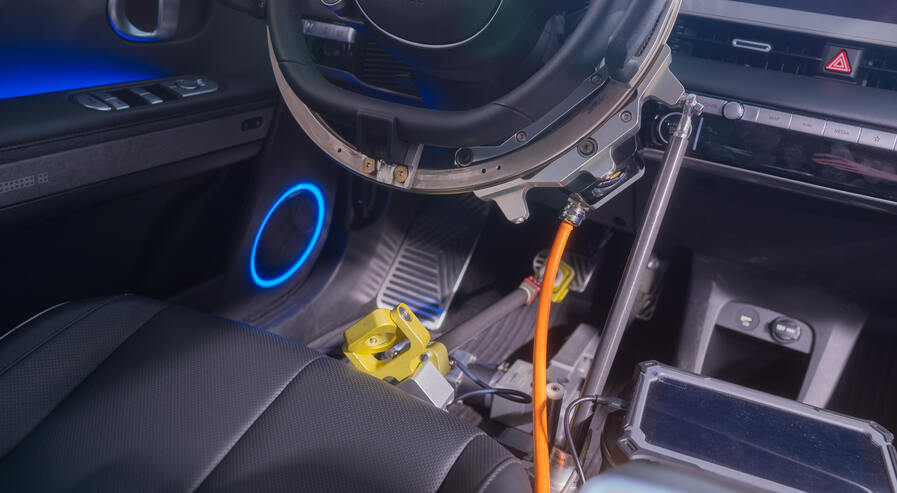
One platform. Countless applications.
The TWDM is much more than a test bench for classic ADAS or AD functions. Thanks to its open architecture, flexible system integration, and high degree of control freedom, it is developing into a multifunctional test platform that supports a wide variety of development and validation processes.
Whether in the early concept phase, software integration, functional validation, or final system validation, the TWDM covers a wide range of applications. Its ability to combine real vehicle interaction with virtual test environments is particularly valuable, enabling test scenarios that would be difficult or impossible to reproduce on the road.
Typical areas of application include:
- E/E architecture testing (WireCar)
- Integration into CI/CD pipelines
- RDE-like testing in the laboratory
- Special drive & steer scenarios
- Drivability and dynamics assessments
- Failure injection tests (FIT) for robustness analysis
The TWDM thus forms a central platform that connects a wide variety of development areas, reduces the effort required for road tests, and significantly shortens test times. It is a solution that not only optimizes processes but also gives development teams new freedom.
Assistance with the testing of driver assistance systems
Precision through intelligent test architecture
Test sensors, cameras, radar, and control units under fully reproducible conditions. Virtual driving environments, real-time simulation, and synchronized signal processing accurately reproduce real-world scenarios.
Technical highlights
- ADAS testing
- Steering and drive simulation tests
- EMC testing
- Combination of virtual and physical test environments
- Flexible scenario control and reproducible test condition
- Compatibility with various sensor and camera types
- Seamless integration without structural measures
- Expandable test architecture for future system generations
Opportunities for efficient development and validation
Use modular ADAS test benches to shorten development cycles and standardize test results. Simulate complex driving situations early on in the lab and increase the maturity of your systems before real-world test drives.
Simple testing
- Validation of driver assistance systems in the lab
- Reproducible tests for safety-critical functions
- Optimization of sensor fusion and algorithms
- Integration into existing development and testing processes
- Combination of software and hardware tests
- Accelerated development through real-time analysis
- Reduced costs for road tests
- Future-proof basis for highly automated driving