
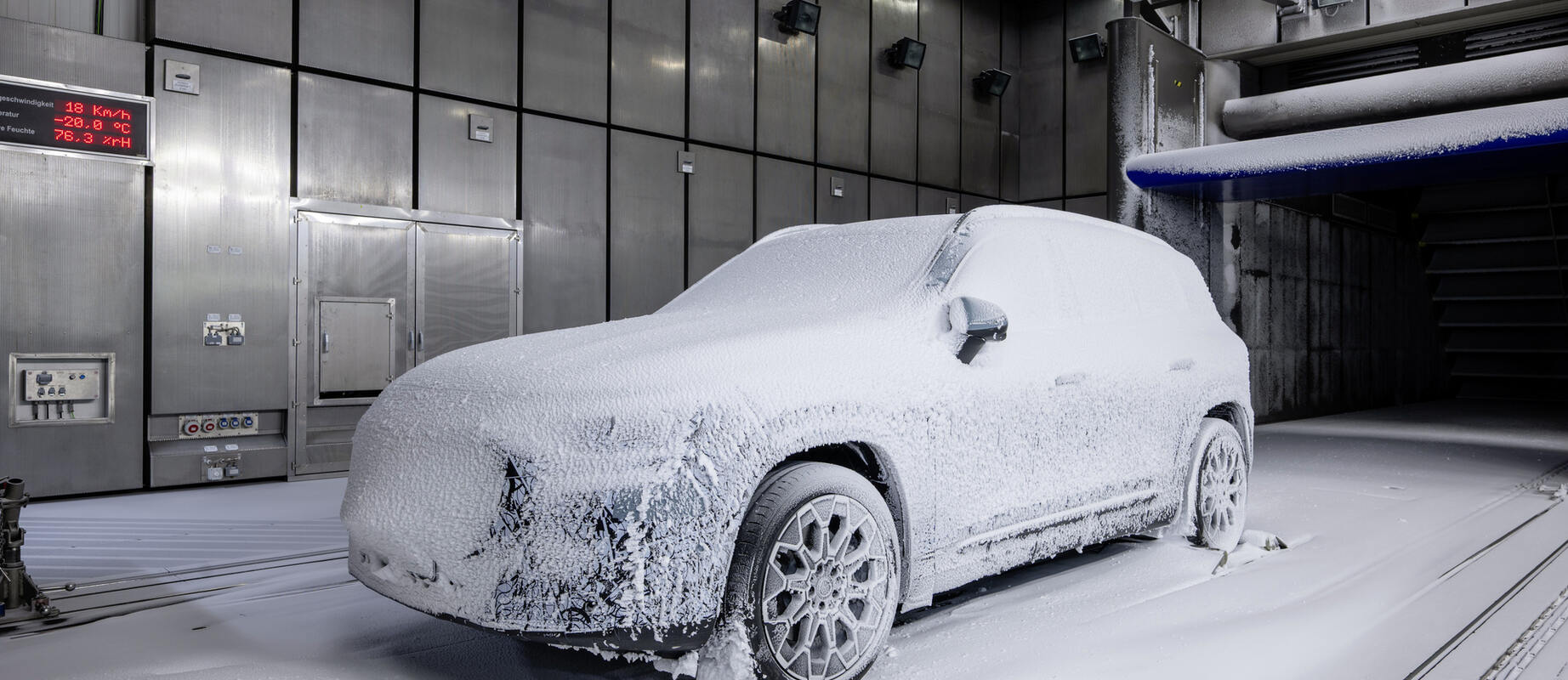
Mastering limit temperatures. Simulating reality.
AIP climate roller test bench for precise car and truck testing under all climatic conditions
The AIP climate roller test bench enables realistic vehicle testing from arctic cold to tropical heat – fully controlled, reproducible, and independent of seasons or weather conditions. By combining precisely simulated environmental influences and defined driving conditions on the roller test bench, real-life scenarios such as winter starts, driving on hot highways, or heavy rain can be reliably reproduced at any time.
Whether thermal management, range behavior, component robustness, or comfort testing: the stably controllable test bench environment creates a consistent basis for evaluating all climate-relevant vehicle functions. The system is designed equally for passenger cars, vans, and heavy trucks – ideal for manufacturers and development departments with a wide range of models. The climate roller test bench makes global weather extremes measurable and predictable – enabling precise, efficient, and year-round vehicle development for a wide variety of markets and application profiles.
Advantages
- Extreme conditions that can be reproduced all year round: Cold, heat, humidity, rain, or snow can be generated consistently and repeatedly at any time.
- Realistic driving and environmental simulation: Real driving scenarios can be recreated under controlled conditions thanks to defined roller loads and precise climate settings.
- Precise evaluation of thermal vehicle functions: Drive, battery, cooling, and interior climate can be specifically tested and optimized under extreme conditions.
- Suitable for passenger cars to heavy trucks: The robust design allows vehicle tests of various weight classes and application profiles under the same climatic conditions.
- Fast, plannable development and variant comparisons: Reproducible climate and driving conditions accelerate tests, facilitate variant evaluations, and reduce the effort required for real extreme driving.
Application
- Testing vehicle behavior during cold starts and heat cycles: Examination of start-up processes, warm-up phases, de-icing strategies, and temperature changes over complete vehicle cycles.
- Evaluation of range and energy consumption in different climate zones: Simulation of typical driving profiles to realistically map the influence of extreme temperatures on consumption, charging behavior, and battery efficiency.
- Functional testing of air conditioning, heating, and air distribution: Analysis of interior temperature control, air flows, dehumidification, and window fogging under defined environmental conditions.
- Stress tests for drive, cooling, and auxiliary units: Evaluation of how engines, transmissions, inverters, cooling circuits, or fans react under extreme temperature and load situations.
- Validation of vehicle-specific application scenarios: Simulation of real-world application situations such as trailer operation in hot weather, continuous inclines, stop-and-go driving in winter, or driving in frosty conditions with high load requirements.
Climatic wind tunnel – ready for any climate

Roller mechanism designed for extreme temperature and humidity conditions
The roller belts, bearing assemblies, and thermally stabilized roller cores are made of materials with low thermal expansion, ensuring that concentricity and surface friction remain constant even in extreme temperature ranges (-30 °C to +50 °C). Special seals and corrosion-resistant components ensure proper functioning even in high humidity, icing, or artificial precipitation.
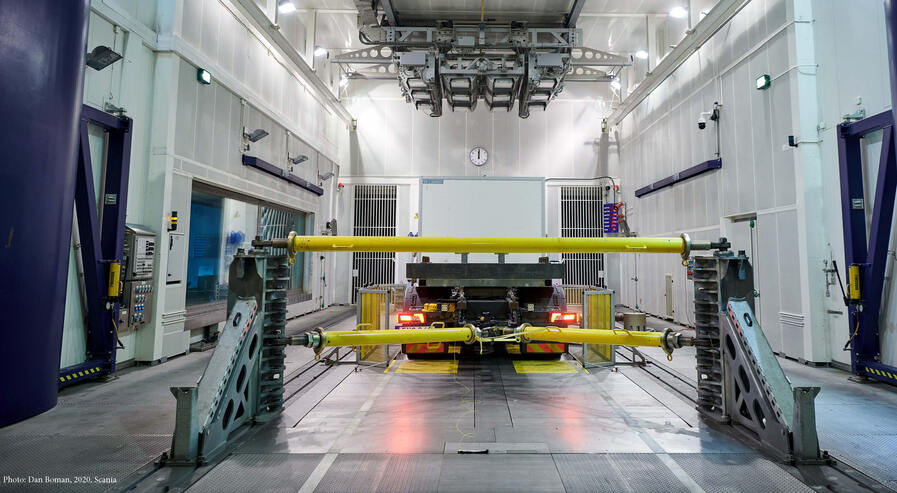
Thermally stable rolling resistance and slip control
The drive and eddy current brake systems are designed to maintain rolling resistance, axle loads, and slip conditions precisely, even under varying climatic conditions. Temperature-compensated sensor systems prevent drift in the measurement signal, ensuring that driving situations such as start-up behavior, continuous load, or load changes remain reproducible with high precision.
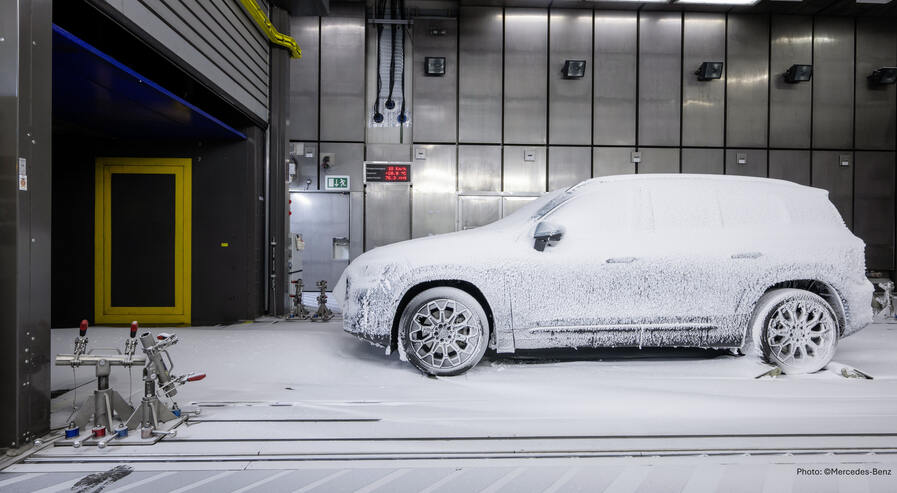
Coupled assessment of climate impact and drive system
Defined combinations of roller load, temperature-humidity levels, and simulated driving profiles allow the interaction between the drive system, energy consumption, cooling circuits, and climate-related resistance to be analyzed. The roller remains mechanically stable and provides consistent measurement conditions, enabling thermal load peaks or changes in friction coefficients to be recorded accurately.
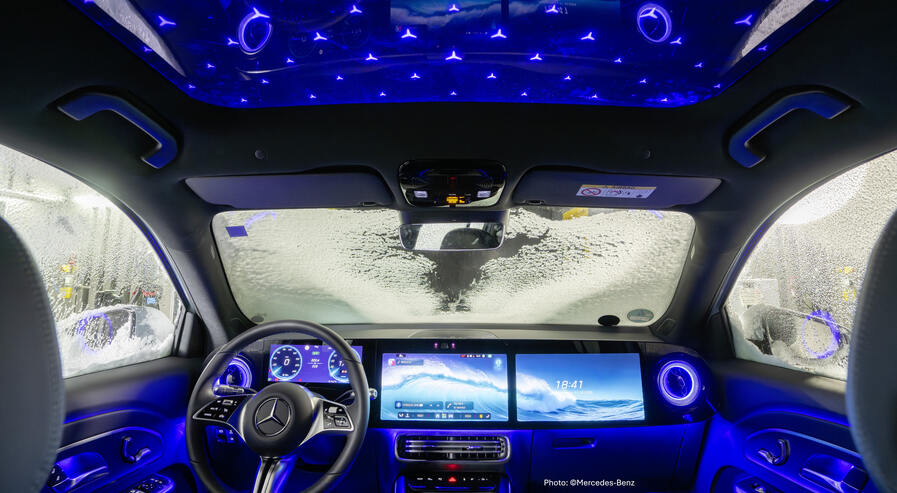
Testing temperature- and humidity-sensitive vehicle components
The robustness of the roller mechanism enables resilient tests in which vehicle components such as sealing systems, bearings, axle suspensions, or chassis connections are subjected to realistic stresses through defined temperature changes, condensation phases, or icing situations – without the roller itself introducing acoustic or mechanical disturbances into the measurement.
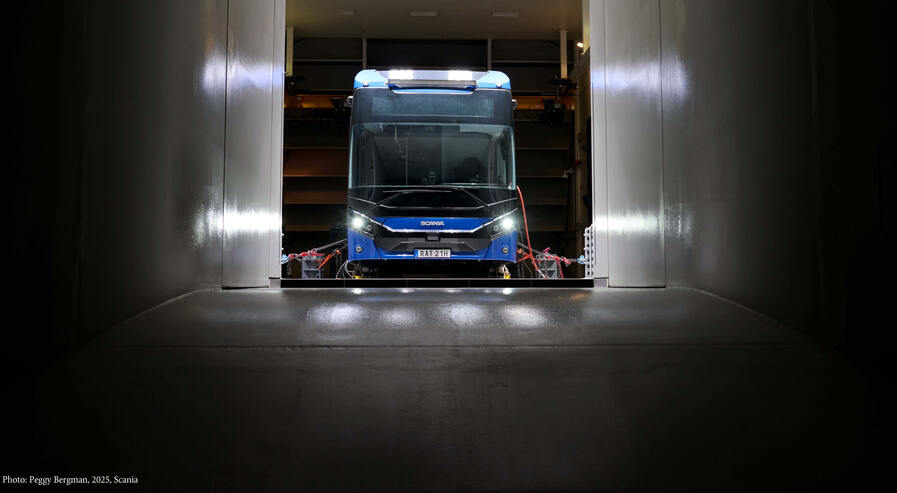
Climate-stable reference platform for sensor and control-related tests
The precise and climate-independent function of the roller allows sensors (including temperature sensors, wheel speed sensors, energy management and power modules) and control algorithms to be validated under extreme climatic conditions. Defined roller movements, constant environmental conditions, and stable load conditions provide a reproducible platform for hardware-in-the-loop and software validations in thermal environments.